Almost nobody calls us the moment a tree starts showing problems. By the time we get the call, the homeowner has usually been watching that tree for weeks or months, telling themselves it’s probably fine. We get it — tree removal is an expense nobody plans for, and a tree that’s been standing for thirty years doesn’t seem like an emergency. But after enough seasons in this business, we’ve noticed the same handful of reasons come up again and again. Here’s what’s actually going on, and why waiting tends to cost more than it saves.
“It still looks healthy from here.”
This is the big one. A tree can look completely normal from the porch or the driveway while the real damage is happening somewhere you can’t see — root rot underground, internal decay in the trunk, a fungal infection working through the heartwood. The visible signs (fungus at the base, a sudden lean, cracked bark) usually show up after the problem has already been developing for a while. By the time it’s obvious, you’re no longer dealing with the early, cheaper version of the problem.
“It’s not actively hurting anything right now.”
A dead limb that hasn’t fallen yet doesn’t feel urgent. A leaning tree that hasn’t tipped further doesn’t feel urgent. But trees don’t fail on a schedule — they fail when wind, ice, saturated soil, or just enough time finally tips the balance. The branch that’s been “fine” for two years can come down in the next windstorm with zero additional warning.
Cost — and the math homeowners don’t see
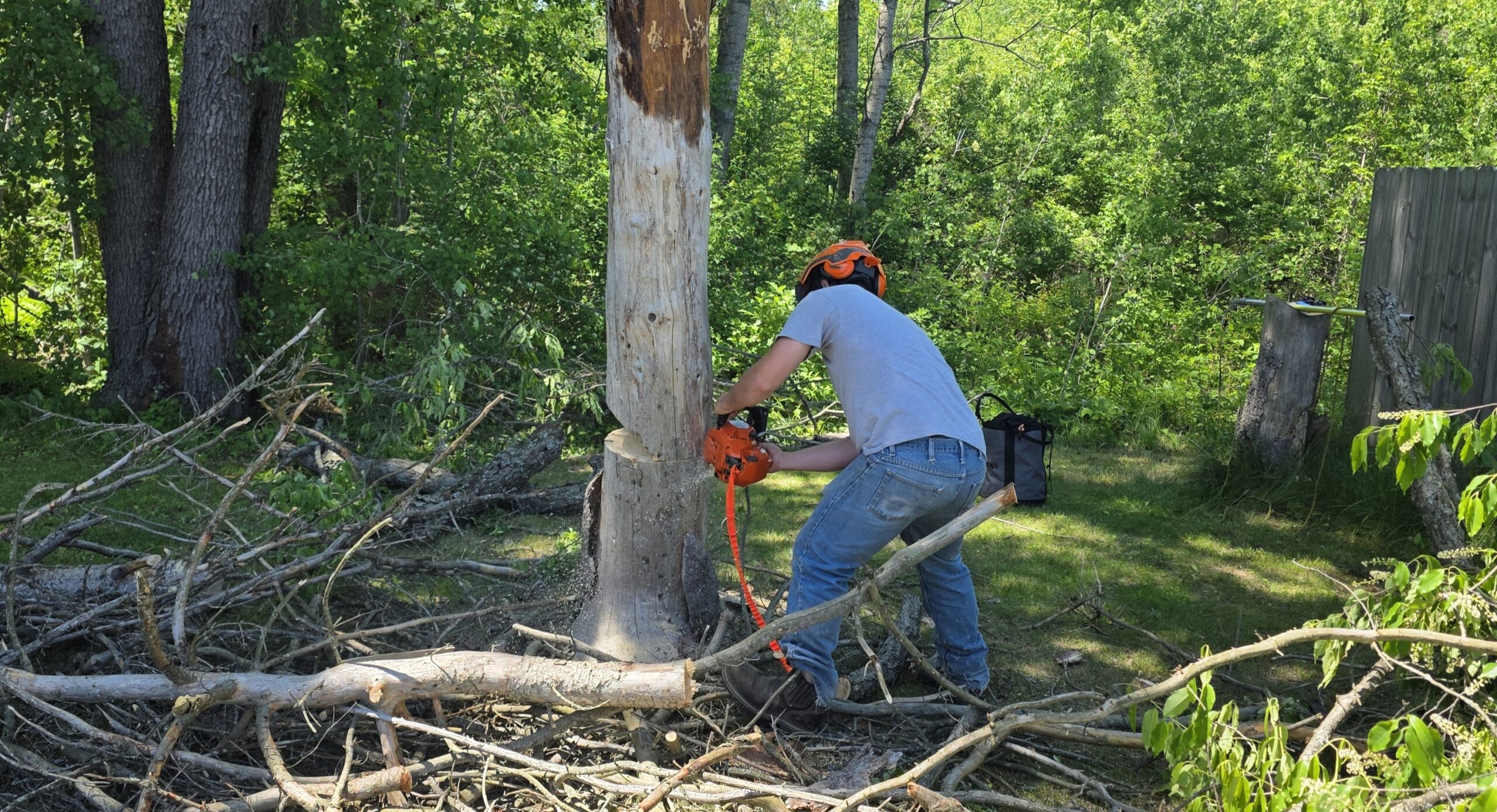
This is the most understandable reason, and also the one where the math works against waiting. A planned removal is the cheapest version of the job: a crew can schedule it, plan the felling direction, work in good weather, and access the property normally. An emergency removal — after a storm, after a tree has already partially fallen, after it’s tangled in a power line — is a different job entirely. Limited access, urgent timelines, and the complexity of a tree that’s already failed all drive the price up. The “save money by waiting” instinct often produces the opposite result.
The sentimental tree
Some trees aren’t being kept out of denial — they’re being kept on purpose. Maybe it was planted when a kid was born, or it’s been part of the yard longer than the house has had an owner. That attachment is real and we’re not going to tell anyone to ignore it. What we’d gently push back on is treating sentimental value and safety as the same question. Sometimes there’s a middle path — selective pruning, cabling, monitoring — that keeps the tree standing longer without ignoring the risk. Worth a conversation either way.
“I don’t actually know if this is serious.”
A lot of delay isn’t denial — it’s uncertainty. Most homeowners don’t have a reference point for what a dangerous crack looks like versus a cosmetic one, or whether a lean has always been there or is new. Without that knowledge, “wait and see” feels like the safe choice, when an honest five-minute look from someone who does this daily would actually answer the question.
What waiting tends to lead to
- Bigger bills. Emergency work, after-hours rates, and storm-damage repairs to your roof, fence, or driveway almost always cost more than the removal would have.
- Insurance headaches. If a tree was a known, visible risk and it causes damage, insurers can dispute or deny the claim on the basis that it was a maintenance issue, not an accident.
- Spreading problems. Disease and pests don’t stay contained to one tree — a dying tree near healthy ones can become the source of a much bigger problem on the property.
- Less control over timing. A planned removal happens on your schedule, in good weather, with the right equipment lined up. An emergency removal happens whenever the tree decides to come down.
The bottom line
If you’ve been quietly keeping an eye on a tree and telling yourself it’s probably fine, that instinct to double check is worth listening to. Most of the time the news is good — plenty of trees that look concerning turn out to need nothing more than a trim. But the only way to know which kind of tree you’re looking at is to actually have it looked at.